Solar Eclipses: Reading the Shadow
After August’s total eclipse, learn why totality follows a narrow path—and how to watch the Sun safely.
Course introduction
About this course
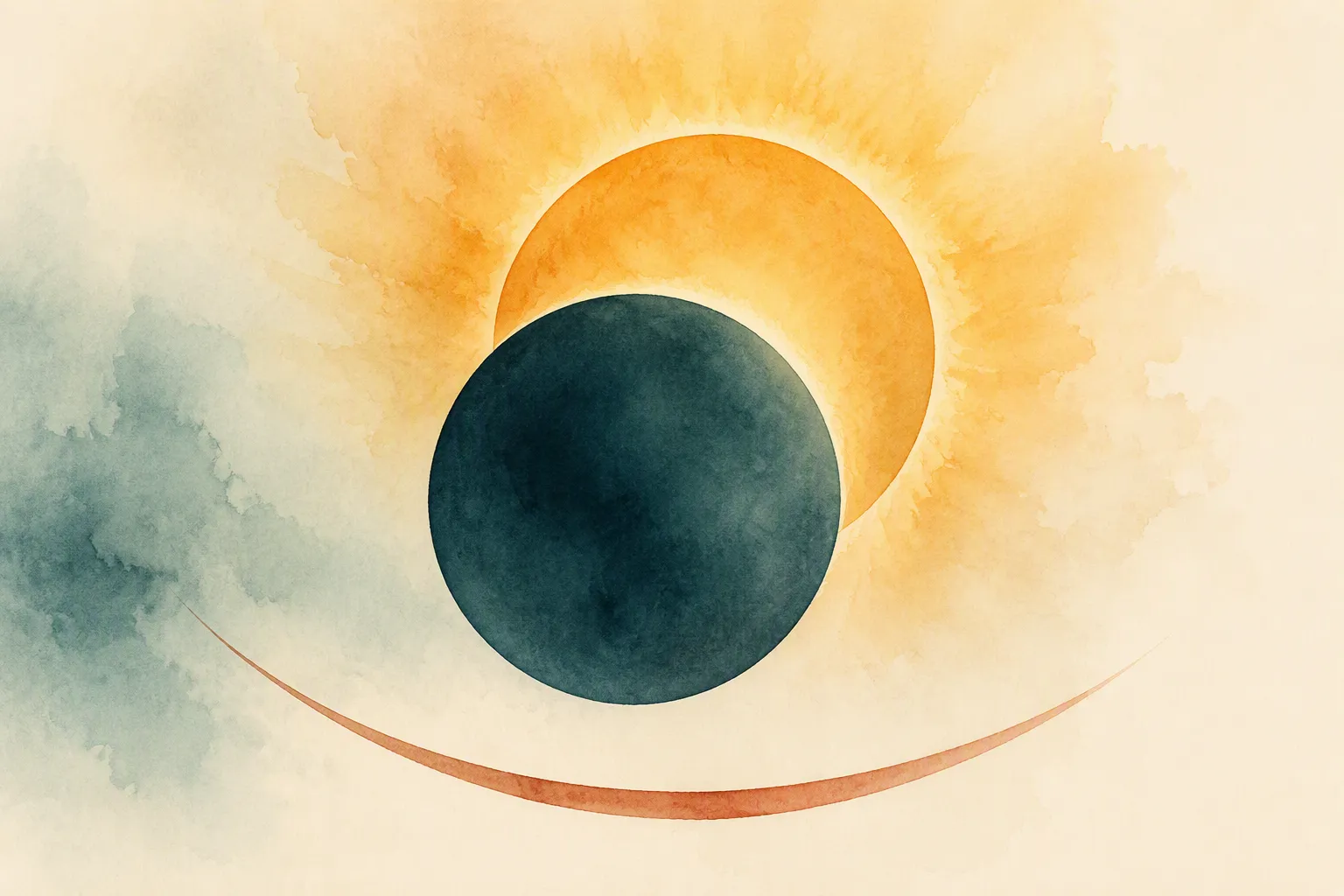
On August 12, the Moon’s shadow crossed Greenland, Iceland, northern Russia, the Atlantic Ocean, Spain, and a small corner of Portugal, producing totality along a narrow route and a partial eclipse across much wider areas. The spectacle is a perfect doorway into the geometry of eclipses.
You’ll learn why the Moon usually misses the exact Sun–Earth line, how the inner and outer parts of its shadow produce total and partial views, and why the Sun’s faint outer atmosphere—the corona—appears during totality. You’ll also learn the essential viewing rule: use eclipse glasses or a safe handheld solar viewer whenever any part of the Sun remains visible; ordinary sunglasses are not safe.
Continue in Henri
Turn this introduction into your course.
Henri asks about your background, goal, and time, then starts the syllabus in the right place for you.