Henri Blog
What Is The Odyssey? The Epic, the Movie, and the Meaning of the Odyssey Years
The Odyssey is Homer's epic about Odysseus' journey home. Learn what it's about, why Christopher Nolan's 2026 film made it trend again, and what 'Odyssey Years' means.
By Henri · Updated
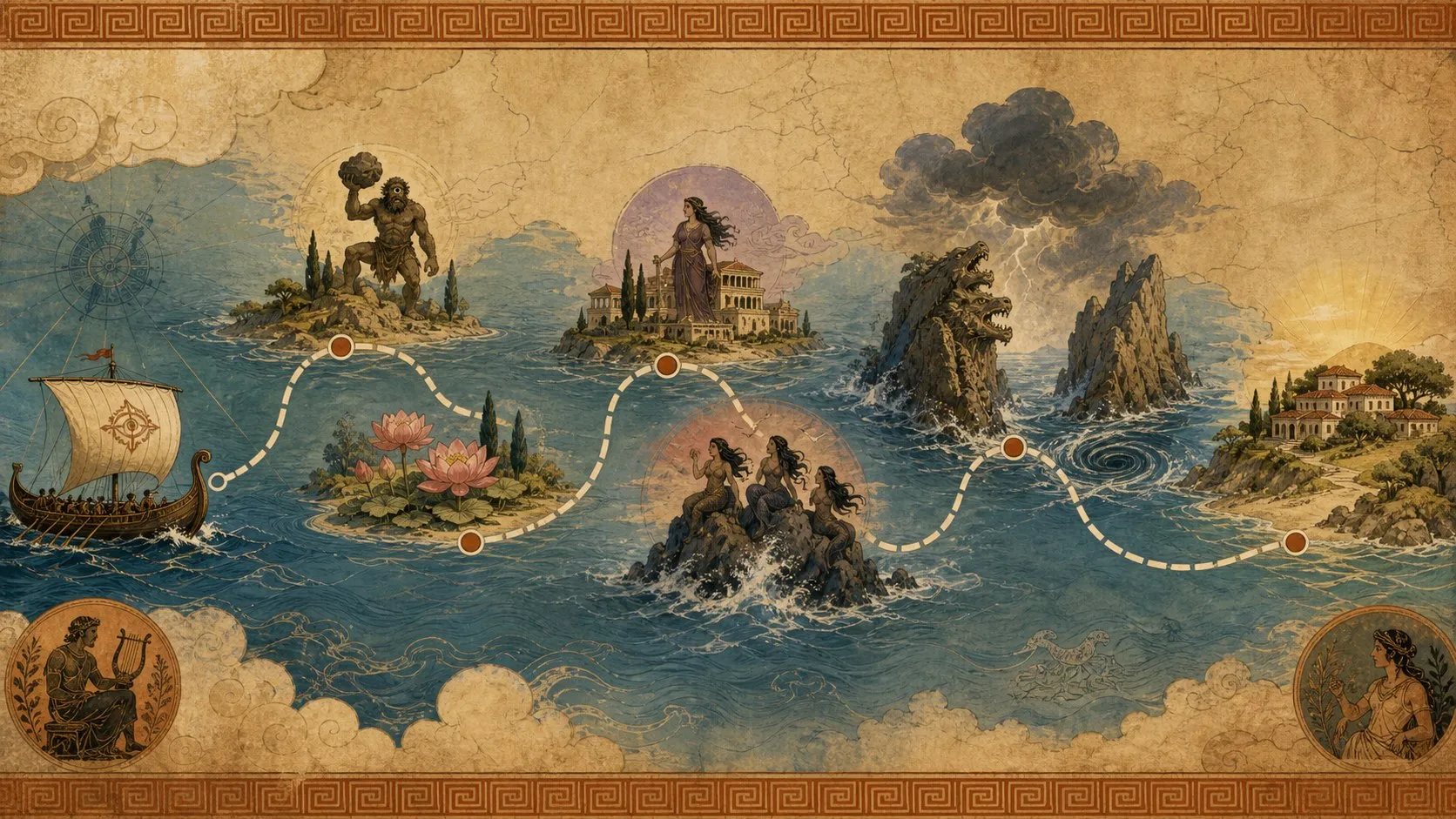
The Odyssey is suddenly everywhere again because of Christopher Nolan’s 2026 film. But before it became a major movie event, The Odyssey was one of the foundational stories of world literature: an ancient Greek epic about a long, difficult journey home. The Odyssey is an ancient Greek epic poem traditionally attributed to Homer. It follows Odysseus, the king of Ithaca, as he tries to return home after the Trojan War, and along the way becomes a story about wandering, delay, temptation, identity, and the difficult work of finding your way back. That is why people are searching for it now. Some want to understand the movie. Some want to know what Homer wrote. Others are encountering phrases like “an odyssey” or “Odyssey Years” and wondering why this ancient word still describes modern life so well.
What Is The Odyssey?
The Odyssey is an ancient Greek epic poem traditionally attributed to Homer. It follows Odysseus, the king of Ithaca, as he tries to return home after the Trojan War. His journey should be simple. Instead, it becomes a long series of obstacles involving storms, gods, monsters, enchantresses, shipwrecks, disguises, and moral tests. At the surface level, The Odyssey is an adventure story. At a deeper level, it asks a more human question: after war, ambition, suffering, and temptation have changed you, can you still return home as yourself? That is the reason The Odyssey keeps coming back. Every generation finds a new version of the same question inside it.
Why Is Everyone Talking About The Odyssey Now?
The current spike in interest comes largely from Christopher Nolan’s film adaptation of The Odyssey, released in theaters on July 17, 2026. The film became a cultural event for several reasons. It brings Homer’s ancient epic to a massive contemporary audience. It was shot across the world using new IMAX film technology. IMAX has described it as the first theatrical release shot entirely with IMAX film cameras, and the company reported a record-breaking $52 million worldwide IMAX debut. That matters because many people are not approaching The Odyssey as literature students. They are approaching it as moviegoers:
- What is The Odyssey about?
- Is The Odyssey based on a book?
- Who is Odysseus?
- Do I need to know Greek mythology before watching the movie?
- Why did Christopher Nolan choose this story? The movie is the hook. The original epic is the deeper answer.
Is The Odyssey Movie Based on Homer’s Poem?
Yes. Christopher Nolan’s The Odyssey is based on Homer’s ancient Greek epic poem. That does not mean the movie can include everything in the original. The poem is long, layered, and full of episodes, flashbacks, gods, family drama, violence, temptation, and political return. Any film version has to choose what to emphasize. For viewers, the important thing is not to memorize every mythological reference before watching. The useful preparation is simpler:
- Odysseus is trying to return to Ithaca after the Trojan War.
- His wife, Penelope, is waiting at home while suitors pressure her to remarry.
- His son, Telemachus, is searching for his place in the household and the world.
- The journey is delayed by divine punishment, human pride, and repeated temptations.
- The story is ultimately about whether Odysseus can reclaim home, identity, and order. If you want a spoiler-light guide before watching, Henri can turn The Odyssey into a quick character map, a timeline of the journey, and a short list of mythological references worth knowing.
What Happens in The Odyssey?
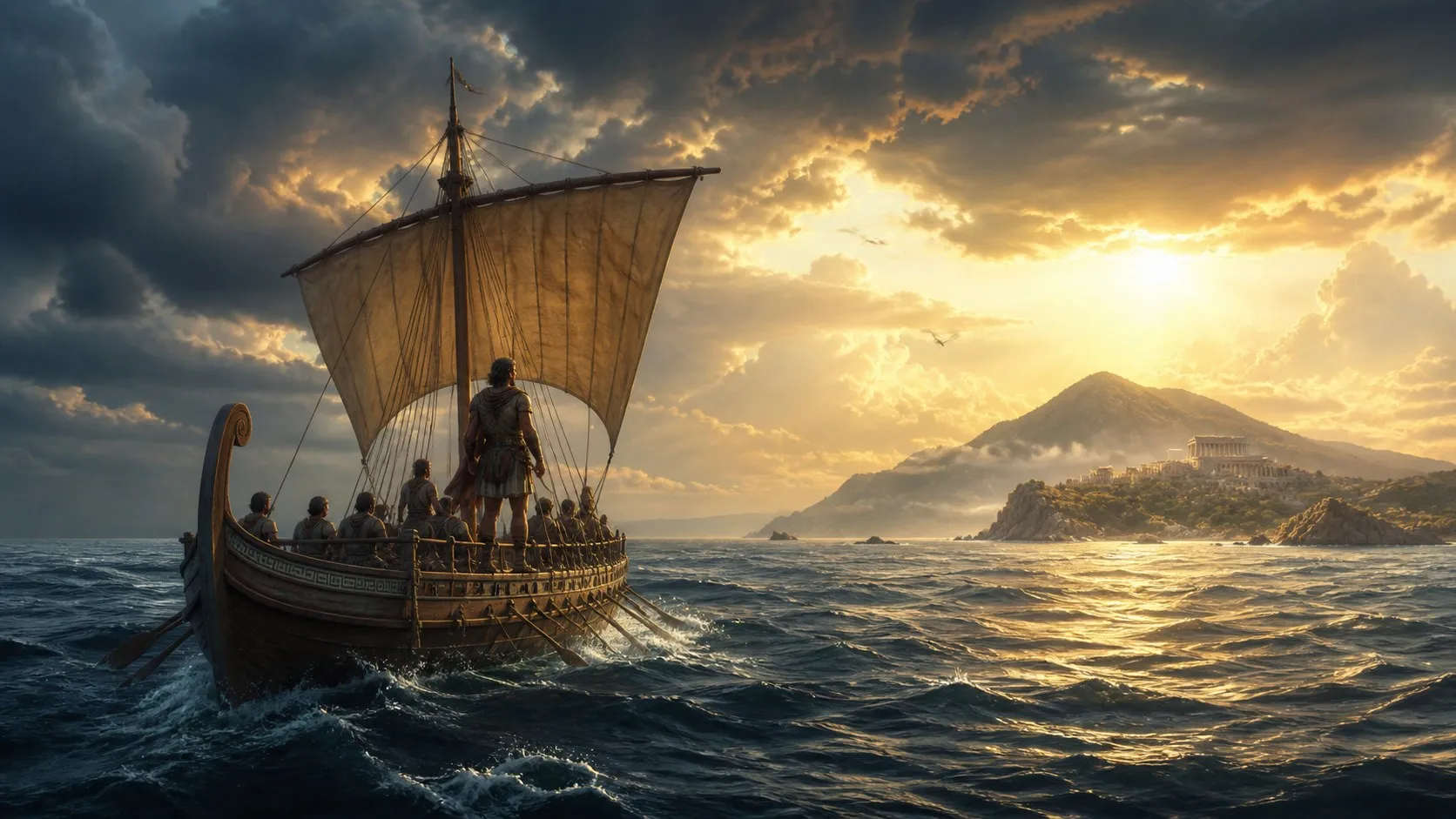
The Odyssey takes place after the fall of Troy. Odysseus has survived the war, but he cannot get home. On the way, he and his crew encounter the Cyclops Polyphemus, the Lotus-Eaters, Circe, the Sirens, Scylla and Charybdis, Calypso, and the anger of Poseidon. Each episode tests something different: cleverness, self-control, loyalty, patience, humility, and the ability to resist distraction. Meanwhile, the story also follows Ithaca. Penelope is surrounded by suitors who want to take Odysseus’ place. Telemachus is growing up without his father. Home is not frozen in time while Odysseus wanders. It is also under pressure. That is what makes the story more than a travel narrative. Odysseus does not only need to reach a location. He needs to return to a life that has been waiting, changing, and nearly breaking in his absence.
The Odyssey Explained: A Simple Way to Understand the Story
The biggest mistake beginners make is trying to understand The Odyssey as a list of names. That makes the poem feel distant and difficult. A better way is to read it as a pattern. The Odyssey becomes easier when you follow four ideas:
- Temptation: What pulls Odysseus away from home?
- Delay: Why does the journey keep stretching?
- Recognition: Who sees Odysseus clearly, and who fails to recognize him?
- Return: What does it mean to come home after being changed? This is where the story becomes modern. The monsters are ancient, but the pattern is familiar. People still lose time to distraction. They still confuse movement with progress. They still leave one version of themselves behind and wonder whether they can return to what matters.
What Are the Odyssey Years?
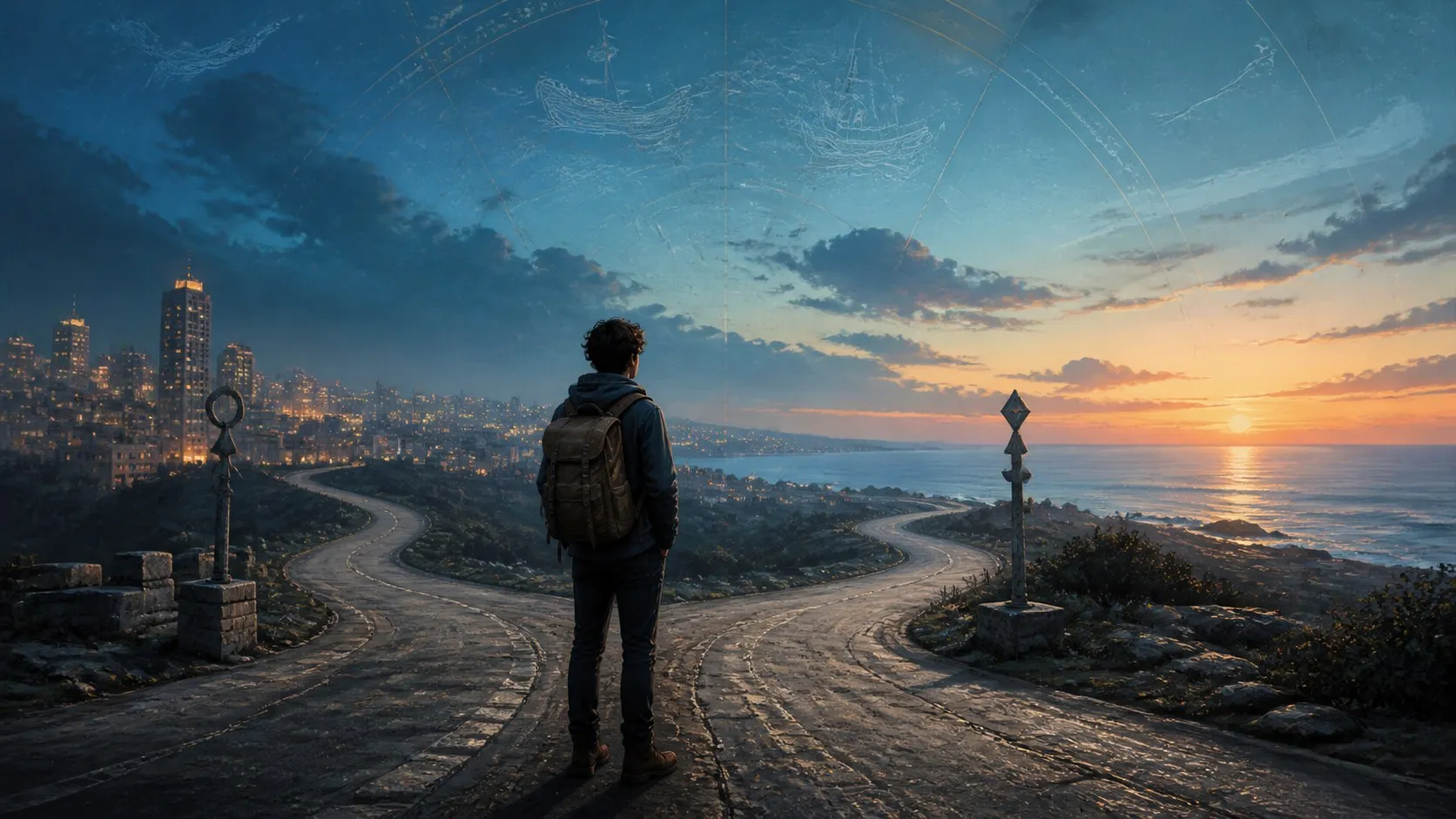
The word “odyssey” is not only the title of Homer’s epic. It has also become a metaphor for a long period of wandering, uncertainty, and self-discovery. American columnist David Brooks helped popularize the phrase “Odyssey Years” in a 2007 New York Times column. He used it to describe the stretched-out transition between adolescence and traditional adulthood: the years when young people are no longer teenagers, but have not yet settled into stable work, marriage, parenthood, or a fixed identity. This period often happens in the twenties and can stretch toward age 30. People try different jobs, move between cities, enter and leave relationships, return to school, change direction, and repeatedly ask what kind of life they are actually trying to build. The metaphor works because Odysseus’ journey home is not direct. It is interrupted, confusing, and full of tests. Modern Odyssey Years can feel similar: not a clean path from school to adulthood, but a long passage through experiments, detours, failure, reinvention, and gradual recognition. The important point is that Odyssey Years are not simply “lost years.” They can be formative years. Like Odysseus, people may eventually arrive at a kind of home: a clearer career direction, a more stable relationship, a stronger identity, or a better understanding of what they do not want. Psychology has a related term: emerging adulthood. The American Psychological Association defines emerging adulthood as a distinct developmental stage spanning the late teens through the twenties, focused especially on ages 18 to 25. The concept is associated with psychologist Jeffrey Jensen Arnett and emphasizes identity exploration, instability, and gradual movement toward enduring adult decisions. The difference is useful. Emerging adulthood is the developmental concept. Odyssey Years is the metaphor people can feel. If you feel like you are in your own Odyssey Years, Henri can help you turn uncertainty into a learning map: what you are exploring, what patterns keep repeating, what skills you are building, and what kind of “home” you may be trying to find.
Why The Odyssey Still Matters
The Odyssey still matters because it can hold several meanings at once. For moviegoers, it is the source material behind a major film. For literature students, it is one of the oldest and most influential epics. For lifelong learners, it is a framework for understanding identity, delay, temptation, and return. For people in their twenties, it can describe the strange middle phase between who they were and who they are becoming. That is the Henri way to approach a trending topic. A hot search term should not stop at a definition. It should become an entry point into a larger map of knowledge. The Odyssey connects literature, mythology, history, psychology, philosophy, and modern life. It is not only about where Odysseus goes. It is about what each delay reveals about him.
Common Misconceptions About The Odyssey
Misconception 1: The Odyssey is only a monster story
The monsters are memorable, but they are not the emotional center of the poem. The real center is homecoming. Each obstacle matters because it delays, distorts, or tests Odysseus’ return.
Misconception 2: Odysseus is a perfect hero
Odysseus is not a simple model of virtue. He is brave, clever, manipulative, proud, adaptive, and morally complicated. That complexity is part of why the story lasts.
Misconception 3: You need to know all of Greek mythology first
You do not. A basic map of the Trojan War, Odysseus’ family, the main gods, and the journey home is enough to begin.
Misconception 4: The Odyssey is only relevant because of the movie
The movie explains the current spike in attention. It does not explain the story’s long life. The Odyssey stays relevant because it gives people a language for wandering, endurance, recognition, and return.
How to Learn The Odyssey Faster
If you are new to The Odyssey, start with these five questions:
- What does Odysseus want?
- What keeps delaying him?
- What does each obstacle reveal about him?
- What is happening in Ithaca while he is away?
- How is he different when he finally returns? Then build a simple learning path:
- First, learn the plot in broad strokes.
- Next, map the major characters: Odysseus, Penelope, Telemachus, Athena, Poseidon, Calypso, Circe, and the suitors.
- Then study the recurring themes: temptation, hospitality, identity, disguise, loyalty, violence, and homecoming.
- Finally, compare the ancient story with modern uses of the word “odyssey,” including the Odyssey Years. Henri can help you turn this into a personalized study plan: a 10-step plot timeline, a character map, a list of key themes, a spoiler-light movie guide, and short quiz questions to check your understanding. Download Henri on the App Store to try it.
Frequently asked questions
What is The Odyssey in simple terms?
The Odyssey is an ancient Greek epic about Odysseus' long journey home after the Trojan War. It is a story about adventure, temptation, identity, and homecoming.
Why is The Odyssey popular again?
The Odyssey is popular again because Christopher Nolan's 2026 film adaptation turned the ancient epic into a major cinema event. The movie renewed interest in Homer's original story and in the broader meaning of the word "odyssey."
Is The Odyssey movie based on a true story?
No. The Odyssey movie is based on Homer's epic poem, which comes from Greek myth and oral tradition rather than verified history.
Do I need to read The Iliad before The Odyssey?
No. You can read The Odyssey first. It helps to know that The Iliad focuses on the Trojan War, while The Odyssey takes place after the war as Odysseus tries to return home.
What does "odyssey" mean today?
Today, an odyssey means a long, difficult journey involving change, delay, and discovery. It can describe literal travel or a personal journey through uncertainty.
What are the Odyssey Years?
The Odyssey Years are a modern metaphor for the extended transition from youth into settled adulthood. They often involve career changes, moving, relationship changes, uncertainty, exploration, and gradual identity formation.
What is the main lesson of The Odyssey?
One main lesson is that returning home is not only about reaching a place. It is about becoming someone who can recognize, reclaim, and live inside what truly matters.