
Henri Blog
Henri: Interactive Learning Format, A Smarter Way to Learn Anything
Henri's interactive learning format turns any topic into a personalized AI course with guided questions, short lessons, quizzes, concept maps, and review.
By Henri · Updated
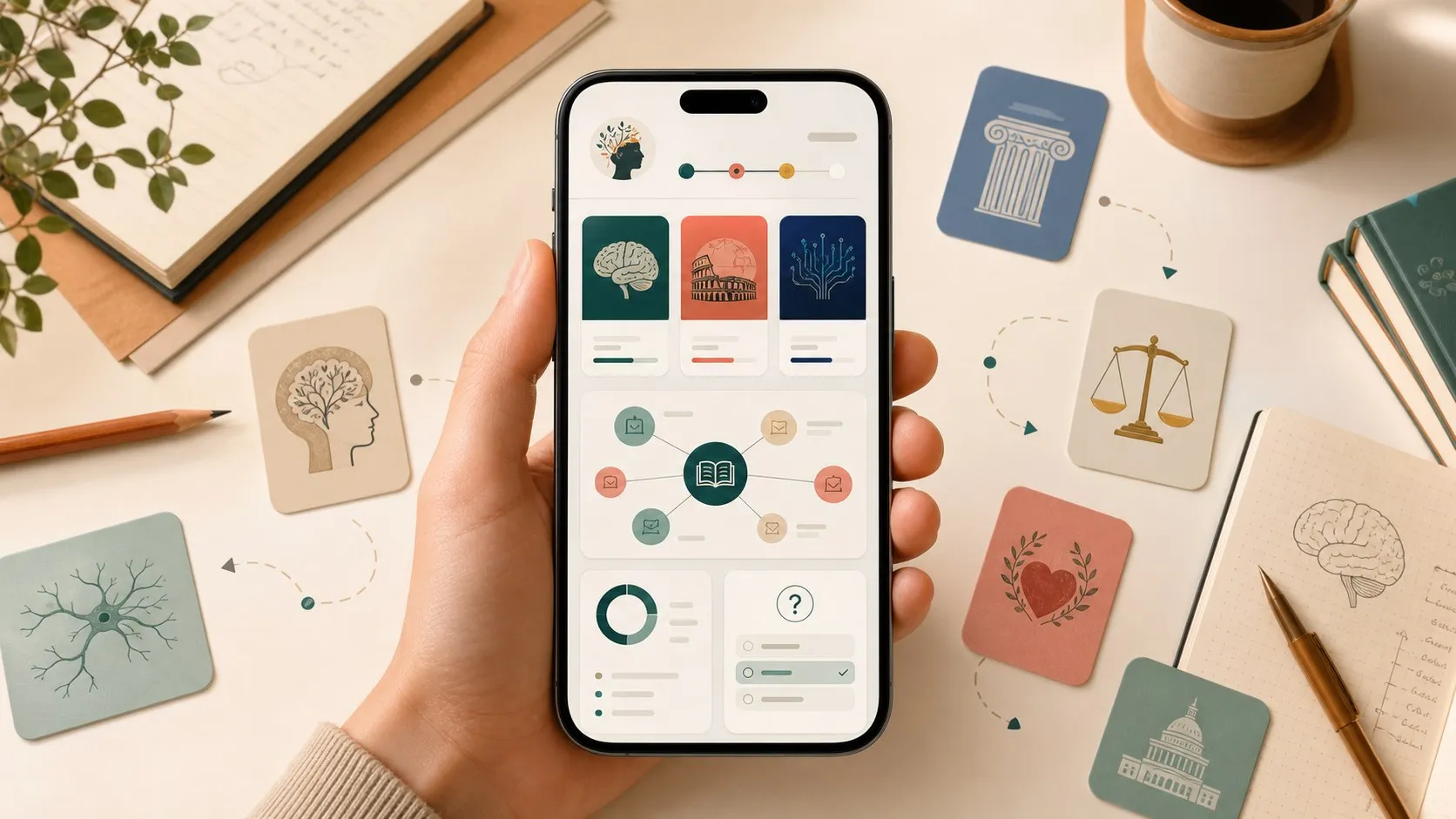
Most learning apps still treat learning as content delivery. You choose a topic. You open a course. You read or watch a lesson. Then you are expected to stay motivated, remember what matters, and figure out what to study next. That model works for some people. But for many lifelong learners, it breaks down quickly. The course is too generic. The lesson assumes too much or too little. The format does not match how the learner thinks. The app gives information, but not a real path. Henri is built around a different idea: learning should start with the learner, not the content. Henri’s interactive learning format uses AI to understand your current level, your goal, your preferred learning style, and the topic you want to explore. Then it turns that information into a personalized course with short lessons, concept maps, quizzes, flashcards, review, and adaptive follow-up. The result is not just another AI chat box. It is a structured way to learn anything.
What Is an Interactive Learning Format?
An interactive learning format is a way of learning that asks the learner to participate actively instead of passively consuming information. In a traditional format, the learner reads, watches, or listens. In an interactive format, the learner answers questions, makes choices, checks understanding, reviews key ideas, and receives feedback along the way. That distinction matters because learning is not the same as exposure. Seeing information once does not mean you understand it. Understanding requires structure, recall, correction, and repetition. Henri’s interactive learning format is designed around that reality. It does not only explain a topic. It helps users move through a learning process.
Why Passive Learning Often Fails
Passive learning feels productive in the moment. You can read an article about ADHD, watch a video about Stoicism, skim a thread about AI agents, or save a post about GLP-1 medications. But a few hours later, most of the information is gone. This happens because passive learning usually lacks four things:
- A clear goal
- A sense of the learner’s current level
- Active recall
- A review loop Without those pieces, the learner may collect information without building understanding. This is especially common for people learning across many fields. A Henri user might want to understand psychology one day, technology the next, and history or politics after that. The challenge is not access to content. The challenge is turning scattered curiosity into structured learning. That is the problem Henri is designed to solve.
How Henri’s Interactive Learning Format Works
Henri does not expect users to write perfect prompts. That is a key product difference. Many AI tools are powerful only if the user already knows how to ask the right question. Henri reduces that burden by starting with guided questions. Before building a course, Henri can ask about the user’s goal, level, time, preferred format, and reason for learning.
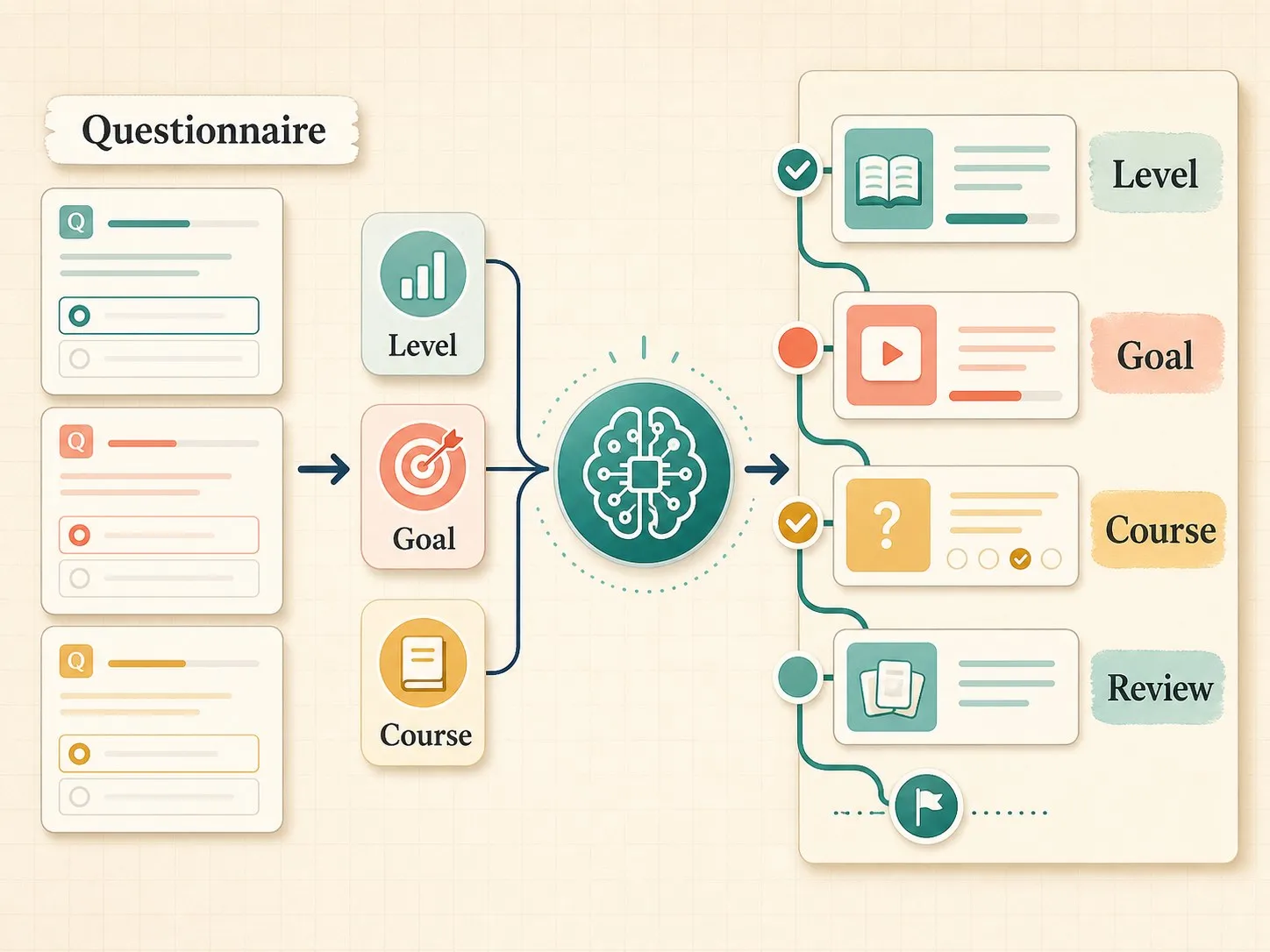
This onboarding process helps Henri understand the learning context:
- What do you want to learn?
- Why are you learning it?
- What do you already know?
- Are you learning for work, school, curiosity, or a personal decision?
- Do you prefer examples, timelines, concept maps, quizzes, or short lessons?
- How much time do you want to spend?
- What usually makes this topic confusing? Based on those answers, Henri can generate a learning path that fits the user instead of forcing the user into a fixed course.
From Topic to Personalized Course
A user should be able to start with a topic, not a prompt. For example:
- “I want to understand ADHD.”
- “I want to learn how AI agents work.”
- “I want to understand the Odyssey.”
- “I want to learn the basics of CRISPR.”
- “I want to understand NATO Article 5.”
- “I want to understand Stoicism.” Henri can then turn the topic into a structured course. That course may include a beginner explanation, key terms, misconceptions, examples, a timeline, a concept map, short quizzes, and review sessions. This matters because complex topics are rarely learned in one answer. They need sequencing. A good learning path answers:
- What should I understand first?
- What terms do I need?
- What are the common misconceptions?
- What examples make the idea easier?
- How do I know if I actually understood it?
- What should I learn next? Henri’s interactive format is designed to answer those questions automatically.
Multiple Learning Formats in One Place
Different topics require different formats. A timeline may be best for history. A concept map may be best for philosophy. A quiz may be best for biology. Flashcards may be best for vocabulary. A guided comparison may be best for politics or technology. Henri brings these formats together instead of treating learning as a single content type.
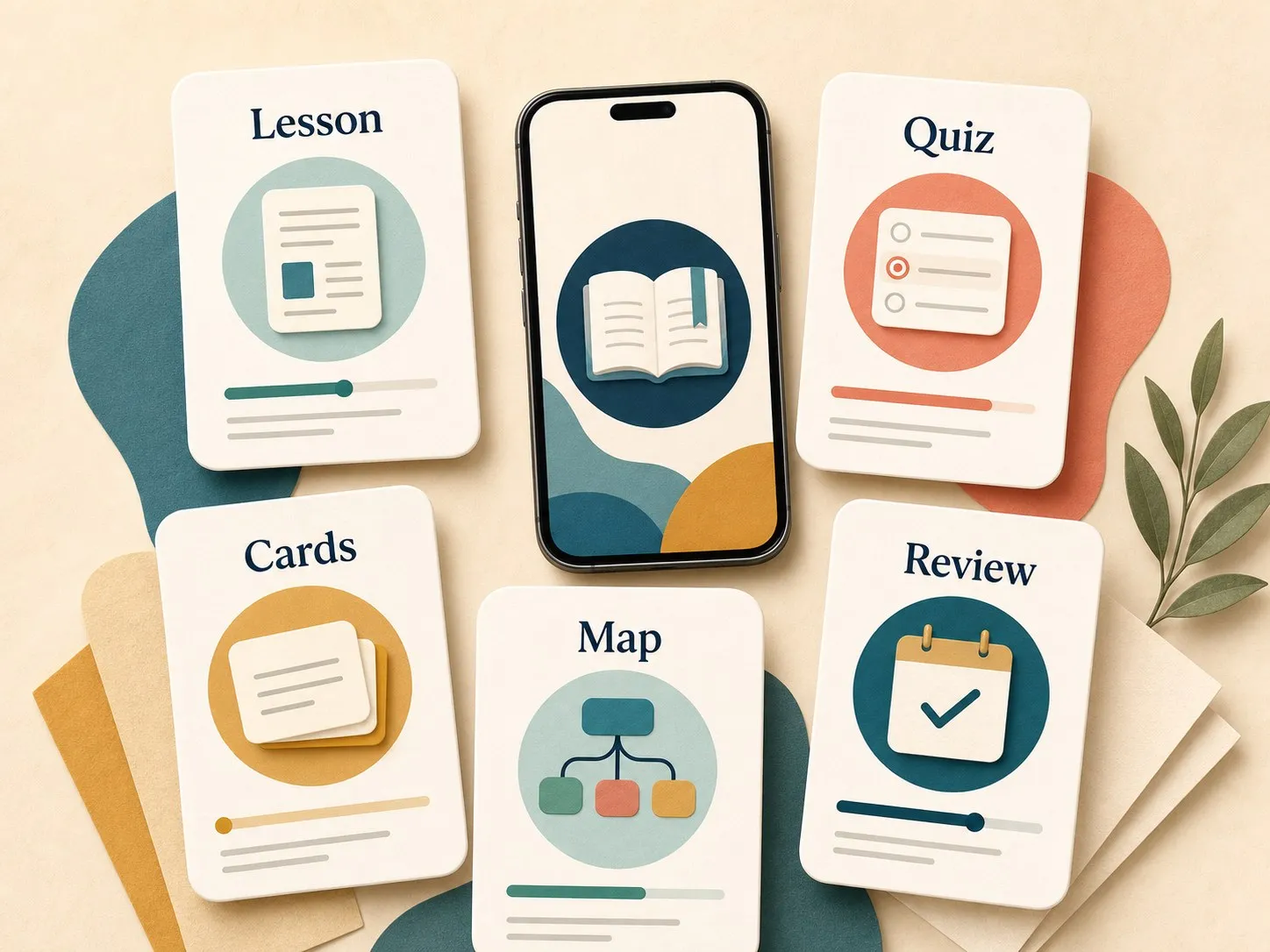
Henri can support learning through:
- Short lessons for quick understanding
- Quizzes for active recall
- Flashcards for key terms
- Concept maps for relationships between ideas
- Timelines for historical or political context
- Comparisons for similar concepts
- Review sessions for retention
- Follow-up questions for deeper understanding The format should serve the learning goal. Henri’s job is to choose and sequence the right formats so the user can focus on learning, not planning.
Why This Is Different From a Normal AI Chatbot
AI chatbots are useful, but they often put too much responsibility on the user. The user has to know what to ask, how much context to provide, what format to request, and how to follow up when the answer is incomplete. Henri changes the workflow.
| Normal AI Chat | Henri Interactive Learning |
|---|---|
| User writes prompts | Henri asks guided questions |
| User manages context | Henri collects learning context |
| User gets answers | User gets a course path |
| User decides what to study next | Henri sequences the learning journey |
| User checks understanding alone | Henri uses quizzes and review |
| One conversation at a time | Learning can compound over time |
The difference is not only interface. It is learning design. Henri uses AI to turn a topic into a structured experience. The learner does not need to become a prompt engineer to get value.
Why This Matters for Lifelong Learners
Lifelong learners are often curious across many domains. They may want to understand psychology, technology, history, philosophy, biology, health, and politics without enrolling in a formal degree program. That kind of learning needs flexibility. A lifelong learner may not want a 40-hour course. They may want a clear 10-minute explanation today, a concept map tomorrow, and a deeper course next week. Henri’s interactive format supports that pattern. It can make learning smaller, more structured, and easier to return to. This is especially useful for topics that become popular suddenly:
- What is ADHD?
- What is context engineering?
- What are GLP-1 medications?
- What is the Odyssey?
- What is prime editing?
- What is NATO Article 5? Trending topics create curiosity. Henri turns that curiosity into understanding.
Examples of Learning With Henri
If a user wants to understand ADHD, Henri can start by asking whether they want a psychology overview, a productivity explanation, or a practical guide to executive function. Then it can build a course covering symptoms, misconceptions, emotional regulation, task paralysis, and when to seek professional help. If a user wants to understand AI agents, Henri can assess whether they already know prompt engineering, then explain tools, memory, context engineering, planning, and real-world examples. If a user wants to understand the Odyssey, Henri can create a character map, a journey timeline, a guide to major themes, and a comparison between Homer’s epic and the modern idea of the Odyssey Years. If a user wants to understand GLP-1 medications, Henri can explain the mechanism, separate evidence from hype, define common terms, and list questions to ask a healthcare professional. In each case, Henri does not simply produce an answer. It builds a learning path.
The Core Principle: Less Prompting, More Learning
The future of AI learning should not depend on who can write the best prompt. Most users do not want to engineer instructions. They want to understand a topic, remember what matters, and know what to study next. Henri’s interactive learning format is built around that principle. The user provides intent. Henri handles structure. The user answers guided questions. Henri builds the course. The user learns through lessons, quizzes, maps, and review. Henri adapts the experience around the learner’s level and goal. That is the practical value of AI in education: not more information, but better learning design.
Frequently asked questions
What is Henri's interactive learning format?
Henri's interactive learning format is a guided way to learn topics through personalized courses, short lessons, quizzes, flashcards, concept maps, and review.
How is Henri different from a normal learning app?
Many learning apps offer fixed content. Henri starts by understanding the learner's level, goal, and preferences, then creates a personalized learning path.
Do I need to write prompts in Henri?
No. Henri is designed to reduce the need for prompt writing. It asks guided questions and uses the answers to build a course or study path.
What topics can I learn with Henri?
Henri is designed for lifelong learning across topics such as psychology, technology, history, philosophy, biology, health, politics, and more.
Why is interactive learning better than passive learning?
Interactive learning helps users recall, apply, and review information. Passive learning can feel useful, but it often leads to weaker retention.
Can Henri help with trending topics?
Yes. Henri can turn trending topics into structured learning paths. For example, users can learn what ADHD means, why AI agents matter, what GLP-1 medications are, or why the Odyssey is being discussed again.
Is Henri only for students?
No. Henri is designed for lifelong learners, including professionals, curious readers, students, and anyone who wants to understand complex topics more clearly.